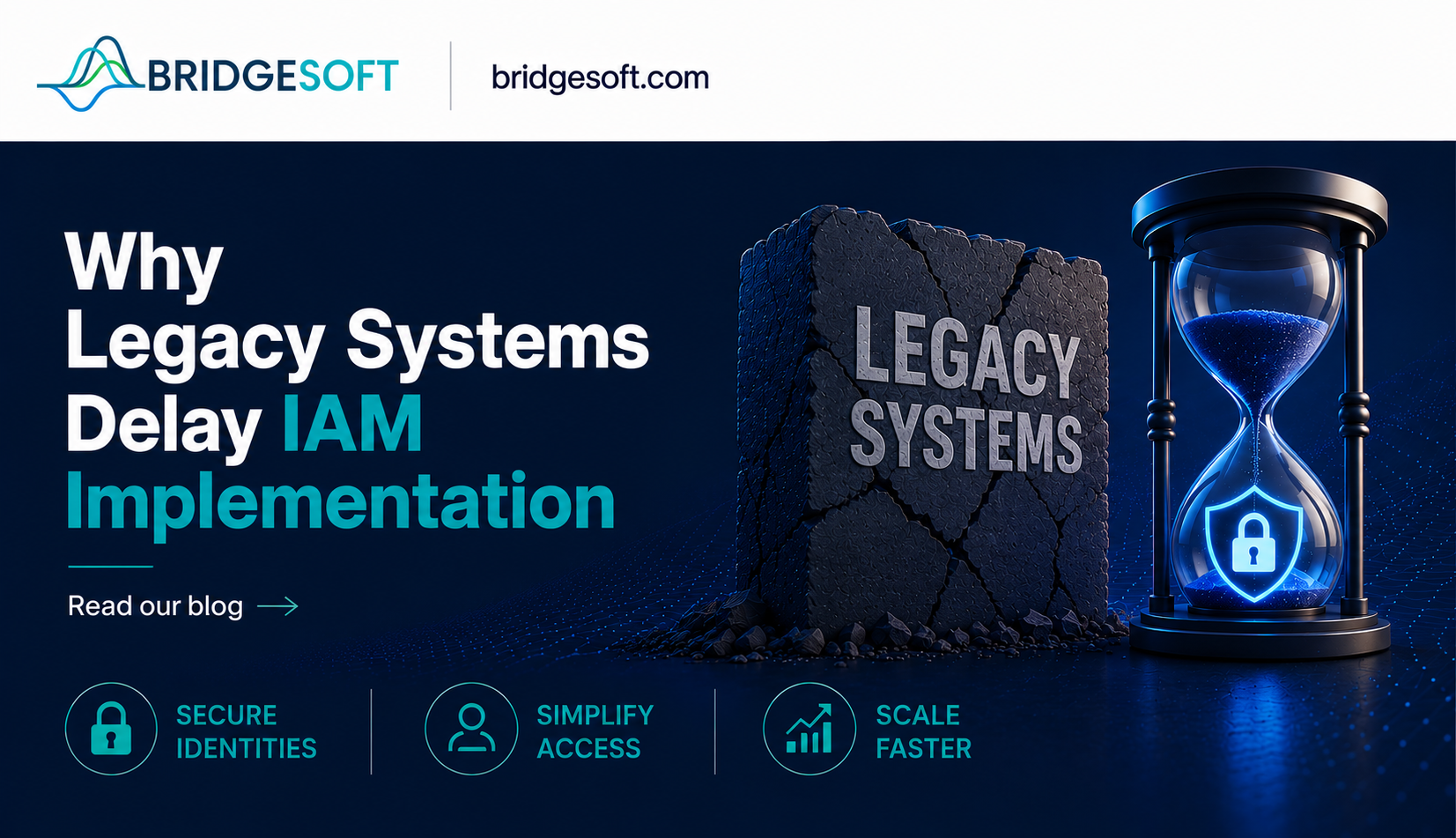
As organizations accelerate digital transformation, Identity Access Management (IAM) has become a critical part of enterprise security. Businesses today must manage secure access across cloud platforms, enterprise applications, hybrid infrastructures, remote workforces, and digital ecosystems. However, many organizations still depend heavily on legacy systems that were never designed to support modern identity requirements.
While these older applications continue to support important business operations, they often create major barriers during IAM implementation. Outdated architectures, fragmented authentication methods, manual processes, and limited cloud compatibility make identity modernization significantly more complex and time-consuming.
Modern enterprises need centralized, scalable, and secure identity environments, but legacy systems often slow down this transformation journey.
Why Legacy Systems Create IAM Challenges
Most legacy applications were built long before cloud computing, remote access, and advanced cybersecurity threats became enterprise priorities. As a result, many older systems still rely on outdated authentication models such as local credentials, shared accounts, and disconnected user databases.
These limitations create significant integration challenges when organizations attempt to implement modern Identity Access Management solutions.
Many legacy applications do not support modern authentication protocols like SAML, OAuth, OpenID Connect, or Multi-Factor Authentication (MFA). This forces organizations to build custom integrations, deploy access gateways, or use middleware solutions to connect older systems with centralized IAM platforms.
Legacy environments also tend to store identity information across multiple disconnected systems, making it difficult to establish a unified identity framework. Without centralized visibility, organizations struggle to manage user access, monitor permissions, and automate identity lifecycle processes effectively.
The Impact on Identity Governance
Strong Identity Governance depends on visibility, automation, and consistent policy enforcement. Legacy systems often lack these capabilities, making governance initiatives more difficult to implement.
Organizations operating with outdated infrastructures frequently struggle to answer critical security questions such as:
- Who has access to sensitive systems?
- Are inactive accounts still active?
- Are users overprivileged?
- Are access approvals properly documented?
- Are compliance policies enforced consistently?
Without centralized governance, businesses face increased risks related to insider threats, audit failures, compliance violations, and unauthorized access.
Manual access reviews and disconnected reporting processes also increase administrative overhead for IT and security teams.
How Legacy Systems Delay IAM Implementation
One of the biggest reasons IAM implementation projects slowdown is the complexity of integrating legacy applications into modern identity ecosystems.
Organizations often face:
- Custom development requirements
- Integration compatibility issues
- Manual provisioning processes
- Inconsistent access controls
- Limited automation capabilities
- Complex infrastructure dependencies
Many older systems require extensive customization before they can support centralized authentication or governance workflows. This increases deployment timelines, implementation costs, and operational complexity.
Manual identity management processes further delay modernization efforts. Tasks such as onboarding, offboarding, permission assignments, and approval workflows often rely on manual intervention, making automation more difficult to achieve.
Cloud IAM Security Challenges in Legacy Environments
As organizations move toward cloud and hybrid infrastructures, identity security becomes even more important. However, many legacy systems struggle to integrate with modern Cloud IAM Security frameworks.
Older applications often lack support for:
- Single Sign-On (SSO)
- Adaptive authentication
- Conditional access policies
- Cloud federation services
- Password less authentication
- Risk-based access controls
This creates security gaps between on-premises legacy systems and cloud environments.
Without consistent identity policies across systems, organizations increase the risk of credential compromise, unauthorized access, and compliance issues.
Modern IAM implementation strategies must therefore focus on securing both legacy and cloud-based systems through a unified identity framework.
The Hidden Costs of Legacy IAM Environments
Legacy systems do not only slow down IAM implementation — they also increase long-term operational costs.
Organizations often spend additional time and resources on:
- Custom integration development
- Middleware maintenance
- Manual administrative tasks
- Troubleshooting compatibility issues
- Compliance reporting efforts
- Security monitoring
Extended implementation timelines also delay the return on investment for broader digital transformation initiatives.
In many cases, the longer organizations postpone legacy modernization, the more difficult and expensive future IAM projects become.
Strategies to Overcome Legacy IAM Challenges
Although legacy environments present challenges, organizations can modernize identity management successfully through a phased approach.
The first step is conducting a comprehensive identity assessment to understand existing systems, authentication methods, access structures, and governance gaps.
Organizations should prioritize high-risk applications containing sensitive data or privileged accounts and gradually integrate them into centralized IAM workflows.
Modern IAM solutions can support legacy modernization through:
- Identity federation
- Access gateways
- API-based integrations
- Directory synchronization
- Automated provisioning workflows
- Privileged Access Management (PAM)
Automation also plays a critical role in accelerating IAM implementation. Automating onboarding, deprovisioning, approvals, and access reviews helps reduce manual effort while improving security consistency.
By adopting phased modernization strategies, businesses can strengthen security while minimizing operational disruption.
The Future of Identity Access Management
As digital ecosystems continue expanding, identity security will become even more important for enterprises operating across cloud, hybrid, and remote environments.
Future-ready IAM solutions are increasingly incorporating:
- AI-driven identity analytics
- Behavioral authentication
- Zero Trust security models
- Intelligent access reviews
- Machine identity governance
- Adaptive access controls
Organizations that modernize legacy identity infrastructures today will be better prepared to support future digital transformation securely and efficiently.
Final Thoughts
Legacy systems remain one of the biggest obstacles delaying successful IAM implementation. Outdated architectures, fragmented identity management, manual workflows, and limited cloud compatibility create security and operational challenges for modern enterprises.
However, delaying modernization only increases long-term cybersecurity, compliance, and operational risks.
By adopting modern Identity Access Management strategies, improving Identity Governance, and implementing scalable IAM solutions, organizations can successfully bridge the gap between legacy infrastructure and future-ready digital ecosystems.
Modern IAM implementation is no longer just a technology upgrade — it is a strategic investment in enterprise security, operational efficiency, and long-term digital growth.
Ready to Modernize Your IAM Strategy?
Legacy systems should not prevent your organization from achieving secure and scalable identity transformation. Discover how modern IAM solutions can simplify integration, strengthen governance, and improve Cloud IAM Security across your enterprise.
Explore how our IAM solution helps organizations modernize identity management, automate workflows, and secure legacy and cloud environments with confidence.
#Bridgesoft #IdentityAccessManagement #IAM #IdentityGovernance #IAMImplementation #IAMSolution #CloudIAMSecurity #CyberSecurity #LegacySystems #EnterpriseSecurity #DigitalTransformation #ZeroTrust #AccessManagement #CloudSecurity #IdentitySecurity #Compliance #HybridCloud #SSO #MFA #DigitalSecurity