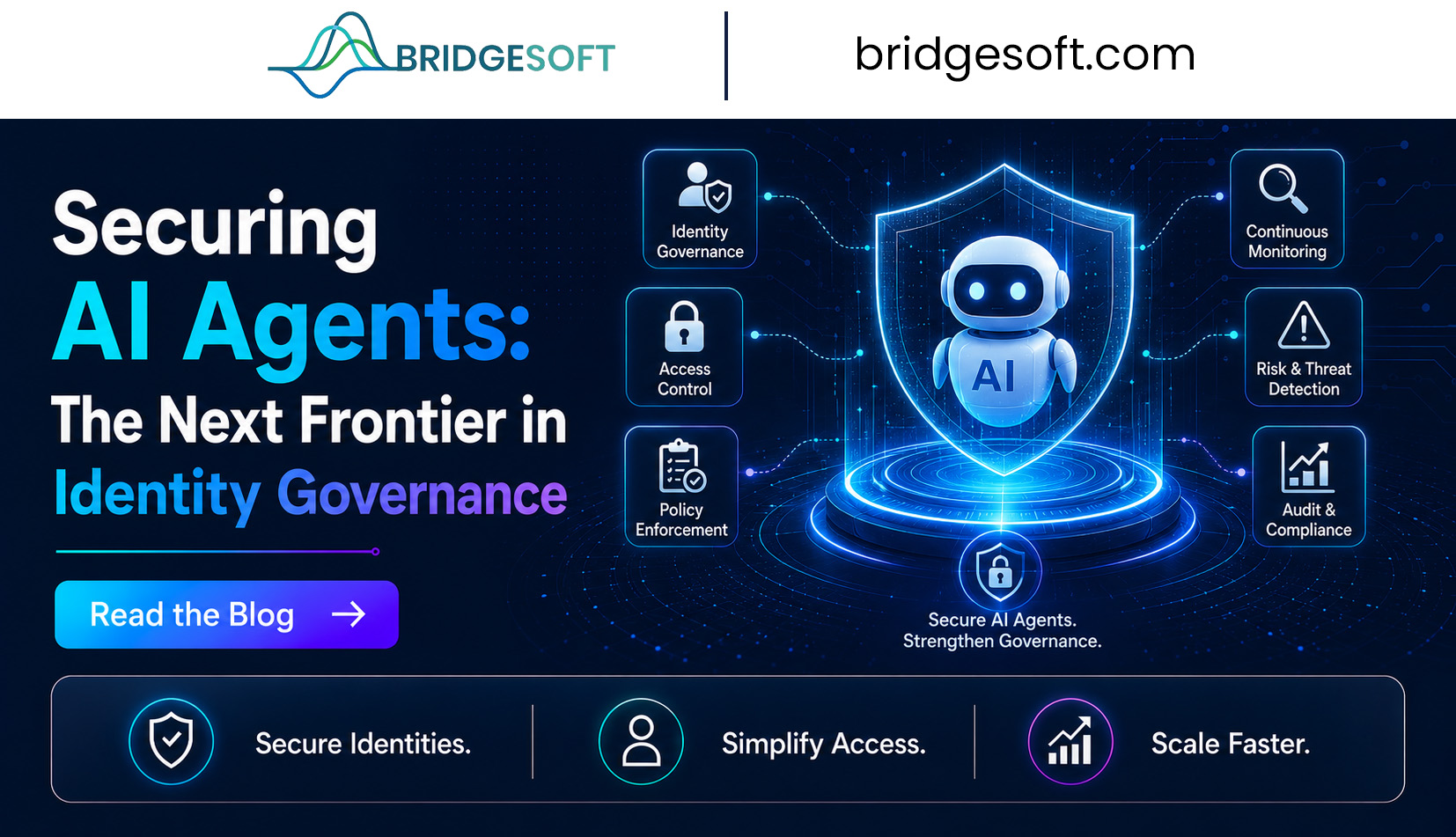
Chatbots and analytics dashboards are no longer the exclusive applications of artificial intelligence. Today’s AI agents can make decisions, interact with applications, access enterprise data, automate workflows, and execute complex business processes with minimal human intervention.
AI agents are quickly taking an active role in corporate operations, ranging from coding copilots and customer service assistants to autonomous business agents and intelligent automation platforms.
But as organizations embrace AI-driven innovation, one critical question often goes unanswered: Who governs the AI agents? This question marks the shift from AI adoption to AI oversight.
Every AI agent operates with a digital identity. It authenticates to systems, accesses sensitive information, invokes APIs, and performs tasks on behalf of users or organizations. Without proper controls, these AI agents can become powerful attack vectors, exposing businesses to unauthorized access, data leakage, compliance violations, and operational risks.
As AI adoption accelerates, Identity Governance is entering a new era—one was managing human identities alone is no longer enough. Identity security is now the foundation of responsible AI since businesses need to extend governance to AI agents and other machine identities. This shift sets the stage for a broader view of enterprise identities.
AI Agents Are Becoming Enterprise Identities
Traditionally, Identity Access Management focused on employees, contractors, partners, and customers. Today, that landscape is changing.
Modern enterprises now operate with thousands of digital identities beyond human users. AI agents, APIs, service accounts, bots, and automated workflows all require access to enterprise applications and data to perform their functions.
Unlike traditional software, AI agents are dynamic. They can analyze information, trigger workflows, retrieve data, and even make recommendations without direct human involvement. To perform these tasks, they need permissions that are often broad and highly privileged.
Every AI agent is, in essence, another identity that must be authenticated, authorized, monitored, and governed.
If organizations fail to treat AI agents as identities, they risk creating security blind spots that traditional controls cannot detect.
Why AI Agents Introduce New Security Risks
AI agents are designed to improve efficiency, but their capabilities also increase organizational risk when identity controls are weak.
An AI agent with unrestricted access could unintentionally expose confidential information, access systems beyond its intended purpose, or execute unauthorized actions if compromised.
Think of an AI assistant linked to cloud apps, customer relationship management (CRM), finance, and HR. If that agent has excessive permissions, a compromised identity could grant attackers access to multiple business systems simultaneously.
AI agents work continuously and at machine speed, in contrast to human users. This means security incidents can escalate much faster in the absence of governance.
The challenge is not simply protecting AI—it is ensuring AI operates within clearly defined security boundaries. That need leads directly to the question of how identity governance must change.
Why Identity Governance Must Evolve
Traditional Identity Governance focuses on answering questions such as:
- Who has access?
- Why do they have access?
- Is that access still appropriate?
These same questions now apply to AI agents.
Organizations must know:
- Which AI agents exist across the enterprise?
- What applications can they access?
- Which APIs do they invoke?
- What data can they retrieve?
- Who approved those permissions?
- How are their activities monitored?
AI identities can easily amass excessive rights in the absence of centralized administration, which makes them appealing targets for hackers.
Modern Identity Governance must evolve from managing only people to governing every identity—human, machine, application, and AI. That broader mandate is why the next step is to define the role of Identity Access Management.
This shift represents one of the biggest transformations in enterprise cybersecurity.
The Role of Identity Access Management
A modern Identity Access Management platform provides the foundation for securing AI agents throughout their lifecycle.
Rather than treating AI as just another application, organizations should assign AI agents unique identities with clearly defined authentication methods, access policies, and governance controls.
Identity Access Management enables organizations to:
- Authenticate AI agents before granting access.
- Apply least-privilege access principles.
- Control permissions based on business requirements.
- Monitor AI activities continuously.
- Detect unusual behavior in real time.
- Revoke access immediately when no longer required.
This centralized approach ensures AI agents operate securely without compromising productivity or innovation. It also shows why governance must extend beyond access control alone.
As enterprises deploy more AI-powered solutions, Identity Access Management becomes essential for maintaining trust and accountability across the organization.
Building Identity Governance for AI
Securing AI agents requires more than authentication—it requires governance throughout the identity lifecycle.
Organizations should establish policies to guarantee AI identities are:
- Properly registered before deployment.
- Assigned only the permissions necessary to perform their tasks.
- Continuously monitored for abnormal behavior.
- Regularly reviewed to validate access.
- Audited for compliance and accountability.
- Removed or updated when business requirements change.
Applying governance consistently across AI agents helps organizations maintain visibility, reduce unnecessary privileges, and strengthen regulatory compliance.
Identity Governance should become an integral part of every AI initiative—not an afterthought added after deployment. This principle leads to the need for an IAM Deployment that is ready for AI.
Why IAM Deployment Must Be AI-Ready
To facilitate cloud adoption and digital transformation, many enterprises are updating their identity infrastructure. However, future-ready IAM Deployment strategies must also account for AI-driven workloads.
An AI-ready IAM Deployment should include support for:
- AI agents and autonomous assistants
- Machine identities
- APIs and service accounts
- Cloud-native applications
- Intelligent automation platforms
- Third-party AI services
Identity architectures should be designed with scalability, automation, and governance at their core. This ensures that as organizations deploy new AI capabilities, identity security can expand alongside innovation.
A more robust security foundation is established, and future complexity is reduced by incorporating AI considerations into IAM deployment from the outset.
Identity Governance Will Define Responsible AI
As AI continues transforming business operations, organizations must balance innovation with accountability.
Responsible AI is not just about model accuracy or ethical decision-making—it is also about ensuring AI operates securely within defined identity boundaries.
Identity Governance provides the visibility, control, and accountability required to manage AI agents responsibly.
Organizations that extend governance to AI identities gain significant advantages:
- Reduced security risks
- Stronger regulatory compliance
- Better visibility into AI activities
- Improved operational control
- Greater trust in AI-driven business processes
Those that fail to govern AI identities may struggle with security incidents, compliance challenges, and unmanaged digital risks as AI adoption accelerates. That risk reinforces why governance must define responsible AI.
Conclusion
AI agents are rapidly becoming trusted participants in enterprise operations, making decisions, automating workflows, and accessing critical business systems. As their responsibilities grow, so does the need to manage them as identities—not just applications. This is the central issue outlined in this article.
The next frontier of cybersecurity is not simply protecting AI technologies—it is governing the identities that power them, defining the final line of defense for responsible AI.
Organizations that invest in AI-ready identity security today will be better equipped to innovate confidently, reduce risk, and lead the future of digital transformation.
Ready to Secure AI Identities?
Build an identity-first security strategy that protects AI agents, strengthens Identity Governance, and modernizes Identity Access Management for the next generation of enterprise innovation.
#IdentityAccessManagement #IAMDeployment #AIAgents #ArtificialIntelligence #AIIdentity #IdentitySecurity #CyberSecurity #MachineIdentity #EnterpriseSecurity #ZeroTrust #CloudSecurity #DigitalTransformation #ResponsibleAI #Governance #AccessManagement #IAM #FutureOfSecurity #AIInnovation #DigitalTrust